
High-Density Felt Specifications: Are GSM and Thickness Enough?
For overseas importers, wholesalers, industrial material buyers, and product manufacturers, GSM and thickness are usually the first two specifications to confirm when sourcing high-density needle punched felt.
For example, a buyer might ask a supplier, “Can you manufacture high-density needle punched felt at 800 GSM and 3 mm thick?”
These two parameters are useful for describing a material, but are they enough to define the exact product required?
Not necessarily. GSM indicates the mass per unit area, thickness describes the material's physical thickness, and apparent density indicates how much mass is contained within a unit of volume. These three parameters are related, but they are not interchangeable.
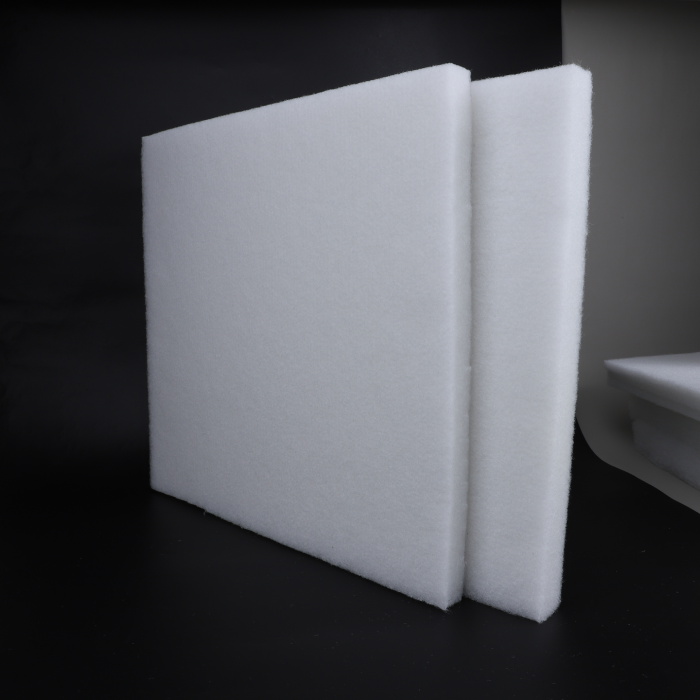
Even when two needle punched felt products have the same GSM, they may have different thicknesses and internal structures because of differences in fiber type, fiber distribution, loft, and the degree of structural compaction.
Therefore, buyers who want accurate quotations, suitable samples, and consistent specifications for bulk production need to confirm more than GSM and thickness alone.
This guide focuses on specification completeness for general high-density needle punched felt. It helps buyers determine whether their current specifications provide enough information and what else they should confirm before requesting a quotation.
1. Why Should Buyers Look Beyond GSM and Thickness When Sourcing High-Density Felt?
GSM and thickness are common purchasing specifications for needle punched felt, but they describe different characteristics of the material.
GSM helps buyers confirm the mass per unit area, while thickness indicates how much physical space the material occupies under specified measurement conditions. However, these two figures do not fully describe how the fibers are distributed within the material.
For example, two needle punched felt products with the same nominal specifications of 800 GSM and 3 mm thickness do not necessarily have the same fiber structure, firmness, surface characteristics, or processing behavior.
If buyers compare quotations based only on these two figures, they may treat materials with different structures as equivalent products.
This issue is particularly relevant to industrial materials that will undergo further cutting, lamination, die-cutting, or assembly.
Therefore, buyers should understand one important point: GSM and thickness are the starting point for specification confirmation, not a complete description of material structure or actual performance.
2. What Can GSM Tell Buyers?
GSM stands for grams per square meter. It indicates the mass of a material per square meter and is one of the most commonly used specifications for nonwoven products.
For example, a material specified at 800 GSM has a target mass of 800 grams per square meter, according to the agreed specification.
GSM serves several practical purposes in purchasing.
First, it helps confirm the mass per unit area.
When buyers need to estimate material consumption, shipping weight, or the amount of material required for a product, GSM provides an important reference.
Second, it helps compare material weight on a consistent basis.
When two materials use the same measurement method and specification definition, GSM helps buyers compare their mass per unit area.
Third, it provides a reference for quotations and production control.
Buyers can specify the target GSM in their inquiry, sample approval, and bulk purchase order, together with an agreed tolerance range.
However, GSM alone cannot tell buyers how thick the material is, how tightly the fibers are packed, or whether the material meets the actual requirements of the final product.
A higher GSM does not necessarily mean a higher apparent density, nor does it automatically mean the material is more suitable for your product.
Therefore, when purchasing high-density needle punched felt, buyers should not use GSM alone to determine whether the material is sufficiently dense.
3. What Can Thickness Tell Buyers?
Thickness describes the physical thickness of a material under specified measurement conditions. It is usually expressed in millimeters (mm).
For industrial material purchasing, thickness may affect installation space, product dimensions, downstream processing, and the structural design of the finished product.
For example, if needle punched felt needs to fit inside a component with fixed dimensions, thickness and its allowable tolerance may become critical purchasing requirements.
However, thickness alone does not indicate the material's mass or internal fiber distribution.
Two materials with the same thickness may have different GSM values. Conversely, materials with the same GSM may have different thicknesses.
In addition, needle punched felt is a fibrous material, and its thickness reading may be affected by the pressure applied during measurement, the measuring instrument, and the test method. When thickness is a critical specification, buyers should therefore confirm the measurement conditions with the supplier instead of comparing figures obtained under different conditions.
For long-term purchasing projects, it is advisable to record the target thickness, allowable tolerance, and measurement method in the mutually approved specification document.
4. Why Does Apparent Density Provide Additional Information?
When purchasing technical felt or high-density needle punched felt, apparent density can help buyers better understand the material's structure.
Apparent density generally refers to the mass of a material per unit of volume. For a uniform, flat material measured under consistent conditions, apparent density can be estimated using its mass per unit area and thickness.
When GSM is expressed in g/m² and thickness in mm, the approximate relationship is:
Apparent density (kg/m³) ≈ GSM ÷ thickness (mm)
For example, assume a material has nominal specifications of 900 GSM and 3 mm thickness. Based on these two nominal values, its estimated apparent density is approximately 300 kg/m³.
This is an estimate calculated from nominal GSM and thickness, not necessarily the actual density confirmed through a standardized measurement method. The result may also be affected by measurement conditions, the definition of thickness, and material uniformity.
This relationship helps buyers understand why GSM and thickness should not be evaluated in isolation.
At the same GSM, a thinner material will generally have a higher estimated apparent density. At the same thickness, a material with a higher GSM will generally have a higher estimated apparent density.
However, apparent density alone cannot prove that a material has better strength, abrasion resistance, sound absorption, or other specific performance characteristics. These properties also depend on fiber material, structure, and actual operating conditions.
The value of apparent density is therefore to supplement the specification information, not to replace all other material and performance requirements with a single number.
5. Why Can Needle Punched Felt Products with the Same GSM Have Different Thicknesses and Structures?
For needle punched felt, the same GSM means that the target mass per unit area is the same. It does not mean that the internal fiber structure is identical.
Several factors can contribute to differences.
Fiber material and fiber characteristics
Different fiber materials, fiber fineness, and fiber lengths can form different fiber networks. As a result, materials with the same mass per unit area may differ in loft, hand feel, and structure.
Fiber distribution and structural loft
A fiber network that retains more internal space may produce a loftier material. A more compact fiber structure may result in different thickness and surface characteristics.
Structural differences caused by needle punching and finishing
Different needle punching conditions and finishing methods may affect fiber entanglement, structural stability, and final thickness. For purchasing purposes, the priority is to confirm the finished material specifications rather than infer final performance from a single manufacturing parameter.
Therefore, buyers should not assume that two materials with the same GSM are automatically interchangeable.
If a project requires consistent thickness, a particular structure, or reliable downstream processing, buyers should confirm material equivalence through complete specifications, sample comparison, and appropriate performance verification.
6. Is “High-Density Needle Punched Felt” a Complete Purchasing Specification?
Usually, it is not.
The term “high-density needle punched felt” communicates that the buyer wants a relatively compact material structure. However, without quantitative requirements or an agreed reference sample, the supplier may not know exactly what the buyer means by “high density.”
Different purchasing projects may interpret high density differently. Some focus on a more compact fiber structure, while others are concerned with dimensional stability or specific processing and end-use requirements.
These needs cannot be adequately defined by the same “high-density” label alone.
If buyers already have clear GSM, thickness, and density requirements, they should provide the target values, allowable tolerances, and measurement conditions wherever applicable.
If they do not yet have a density value, this does not mean they cannot start an inquiry. They can provide an existing sample, product drawing, intended application, or description of the required structural characteristics so the supplier can identify what additional information is needed.
The key is not to know every technical parameter before requesting a quotation. It is to make clear which requirements are already defined and which still need evaluation.
7. What Other Specifications Should Buyers Confirm When Requesting High-Density Felt?
Once GSM and thickness have been established, buyers can confirm additional information according to the needs of the project.
Fiber material
Specify the required fiber type or fiber blend. Different material systems should not be considered equivalent simply because they share the same GSM and thickness.
Target apparent density or structural requirements
If the project has a defined requirement for material compactness, provide a target density, reference sample, or mutually agreed structural standard. If no numerical value is available, explain the practical requirement so the supplier can assess whether density needs to be specified separately.
Thickness and allowable tolerance
If installation space or downstream processing is sensitive to thickness, confirm the nominal thickness, allowable tolerance, and measurement method.
GSM and allowable tolerance
Confirm the target GSM and the agreed tolerance to prevent the quotation, approved sample, and bulk purchase order from using different specifications.
Width and supply format
Confirm whether the material is required in rolls, sheets, or custom-cut pieces. Provide the required width, roll length, or finished dimensions.
End use and downstream processing
If the material will be die-cut, cut to size, laminated, or assembled into a finished product, inform the supplier of these requirements. This helps the supplier assess whether the specification is complete instead of quoting based on two parameters alone.
Sample and bulk approval criteria
Before bulk purchasing, buyers should confirm the sample specifications and define the parameters that will be used to inspect the production order. For important projects, required performance tests and acceptance criteria should also be agreed upon in advance.
Not every item needs to become a separate specification on every purchase order. The final requirements should depend on the material's application, purchasing risk, and the quality requirements agreed upon by both parties.
8. How Can Buyers Make High-Density Felt Quotations from Different Suppliers Comparable?
If suppliers receive only a brief inquiry for “high-density needle punched felt” with a specified GSM and thickness, they may quote their own standard material structures.
Even if the figures on their quotations are identical, the materials offered may not be equivalent.
To improve quotation comparability, buyers can follow these practices.
First, standardize the material definition.
Confirm the fiber type, GSM, thickness, and any necessary density or structural requirements. Do not rely on the product name alone.
Second, standardize the measurement basis.
For critical parameters such as thickness, GSM, and density, confirm the measurement methods, units, and allowable tolerances.
Third, ask suppliers to identify unspecified parameters.
If the buyer has not provided an apparent density or structural requirement, ask the supplier to state the material structure used as the basis for the quotation and identify which specifications still require sample confirmation.
Fourth, confirm the actual material through samples.
Samples help buyers check appearance, thickness, hand feel, and other relevant characteristics. For specific performance requirements, appropriate test methods are still necessary; appearance or hand feel alone cannot establish performance.
Fifth, use the approved specifications for bulk orders.
After sample approval, record the agreed parameters and acceptance requirements in the specification document or purchase order. This helps reduce differences between the approved sample and subsequent production batches.
The purpose of this process is not to add unnecessary purchasing steps. It is to help different suppliers quote and provide samples under conditions that are as consistent as possible.
9. How Should Buyers Request a Quote If They Do Not Know the Target Density?
For importers and manufacturers developing a new product, it is not unusual to lack a target apparent density at the beginning of the project.
If GSM and thickness are already known, buyers can submit these two parameters and provide any other available information.
For example, they can explain:
The intended product application.
Whether the material is required in rolls or cut pieces.
Whether an existing sample or product drawing is available.
Whether the product has specific requirements for material compactness, firmness, or dimensional stability.
Whether there are particular processing or assembly conditions.
Which specifications have already been confirmed and which still require the supplier's evaluation.
If the project does not yet have a complete technical specification, buyers can also provide an existing material sample or product photos and explain how the finished product will be used.
For customized material projects, an experienced needle punched nonwoven manufacturer can discuss possible material options based on the available information and identify the additional parameters that need to be confirmed.
HuiZhou JinHaoCheng Nonwovens Co., Ltd. has been engaged in nonwoven material research and production since 2005 and can discuss fiber materials, GSM, thickness, density, and processing requirements for different needle punched felt projects. For overseas buyers sourcing customized materials, it is advisable to explain the end use early in the inquiry and confirm the sample and specification document before bulk production.
10. Conclusion: GSM and Thickness Are Important, but They May Not Fully Define High-Density Felt
When purchasing high-density needle punched felt, GSM, thickness, and apparent density provide different types of information.
GSM indicates mass per unit area, thickness describes the material's physical thickness, and apparent density adds information about mass per unit volume. These parameters are related, but they are not interchangeable and cannot independently determine all material properties.
If buyers provide only GSM and thickness, a supplier may be able to offer a preliminary quotation. Whether these details are sufficient to confirm the final specification, however, depends on the fiber material, structural requirements, measurement conditions, and intended application.
A more reliable purchasing approach is to identify the parameters that have already been established, add the necessary material information, and use samples and mutually approved specification documents to align quotations with bulk-order requirements.
If you are sourcing high density nonwoven felt or other customized needle punched felt, you do not need to determine every technical parameter before starting an inquiry. Begin with the available GSM, thickness, intended application, and sample information, then work with the supplier to identify any missing specifications. This approach can help establish clearer and more practical purchasing requirements.




